Maze Hill sofa removal and rubbish clearance for narrow access
Posted on 12/10/2026
If you live in or near Maze Hill, you probably already know the problem: the sofa looks manageable in the room, but the moment you try to move it out, the hallway feels half its width and the stairs seem to turn on purpose. That is exactly where Maze Hill sofa removal and rubbish clearance for narrow access becomes a very practical service rather than a luxury. Whether you are clearing a flat, replacing bulky furniture, or getting rid of mixed household waste, the challenge is often not the lifting itself. It is the angles, the corners, the stairs, the shared entrances, and the simple fact that London homes can be a bit awkward. This guide explains how narrow-access clearance works, what to expect, how to avoid damage, and how to make the job smoother from the start.

Contents
- Why Maze Hill sofa removal and rubbish clearance for narrow access Matters
- How Maze Hill sofa removal and rubbish clearance for narrow access Works
- Key Benefits and Practical Advantages
- Who This Is For and When It Makes Sense
- Step-by-Step Guidance
- Expert Tips for Better Results
- Common Mistakes to Avoid
- Tools, Resources and Recommendations
- Law, Compliance, Standards, or Best Practice
- Options, Methods, or Comparison Table
- Case Study or Real-World Example
- Practical Checklist
- Conclusion
- Frequently Asked Questions
Why Maze Hill sofa removal and rubbish clearance for narrow access Matters
Narrow access changes everything. A standard sofa removal in a house with a wide front path can be straightforward; the same sofa in a Maze Hill flat with a compact staircase, a shared landing, or a tight side passage can become a completely different job. You need more planning, more care, and usually more patience than people expect.
Why does that matter? Because forcing bulky furniture through a confined route can lead to scuffed walls, broken bannisters, torn upholstery, or a sofa that gets stuck halfway down a staircase. And nobody wants that awkward moment where everyone is standing still, quietly pretending there is a better angle. Truth be told, there usually is a better angle, but it takes the right method.
Narrow-access rubbish clearance also matters because it affects the rest of the property. Shared hallways, communal entrances, and period properties often need extra consideration for neighbours and building surfaces. If you are clearing waste from a flat, you want the process to be tidy, safe, and quick rather than loud, messy, and stressful.
For many local residents, this kind of work sits somewhere between furniture moving and full clearance. It is not just about lifting. It is about route planning, protection, and disposal. That is why it often makes sense to pair sofa removal with a broader rubbish collection in Greenwich plan, especially if there are extra bags, broken items, or old household bits to go with it.
Expert summary: Narrow access clearance is less about brute strength and more about planning the route, protecting the building, and removing items in the safest possible sequence.
How Maze Hill sofa removal and rubbish clearance for narrow access Works
The process is usually more methodical than people think. A good clearance starts before anyone lifts a single cushion. The team needs to understand the item, the route, and the likely pinch points. That might mean measuring the sofa, checking stair width, noting turns, and deciding whether the item can be carried in one piece or needs partial dismantling.
In narrow-access work, the route matters as much as the rubbish itself. A classic example is a two-seater sofa that fits through the front room but not the stairwell corner because the ceiling drops low and the banister leaves no room to tilt. In those cases, the team may remove the feet, armrests, or other detachable parts first. Sometimes they wrap the sofa to protect both the fabric and the walls. Sometimes they use gliders or lifting straps. It depends on the layout, not guesswork.
Waste clearance follows a similar logic. Bags and smaller items often go first so the path is less cluttered. Large items come out when the route is clear. If there are mixed materials, the loading order matters, especially if anything needs segregating for recycling or disposal. For example, a room clear-out might include a sofa, a coffee table, cardboard packaging, an old rug, and a few black bags of broken household items. That is not unusual. It just needs a sensible sequence.
For some households, especially in compact homes, a broader waste removal Greenwich service is more efficient than booking item-by-item disposal. It gives you one tidy visit instead of several frustrating trips. And to be fair, one visit is usually easier on everyone.
What happens during a narrow-access collection?
- Initial visual check of the item and route
- Identification of obstacles such as stairs, door frames, and turns
- Protection of floors, corners, and contact points where needed
- Careful lifting, turning, or partial dismantling
- Removal of the sofa and associated rubbish
- Responsible disposal or recycling where possible
If the access is especially tight, timing can matter too. It is often easier to move bulky items when the building is quieter, the corridor is clear, and neighbours are not trying to get past with shopping bags, prams, or bikes. Little things like that make a real difference.
Key Benefits and Practical Advantages
The obvious benefit is simple: the sofa gets out and the rubbish disappears. But there are several other advantages that are easy to overlook until you are in the middle of the job.
1. Less risk of damage
Careful narrow-access removal reduces the chance of scraped paint, chipped plaster, or damaged furniture. That matters in older Maze Hill properties where hallways can be narrow and finishes are easy to mark.
2. Faster, cleaner clearance
When the route is planned properly, the job usually moves faster. A clear path and the right lifting method can save a lot of time. No faffing about, basically.
3. Better use of space
Many households in Greenwich flats do not have storage for unwanted bulky waste. A proper clearance frees up the room quickly, which is especially useful during a move, refurbishment, or rental turnaround.
4. More suitable for mixed loads
Maybe the sofa is the big issue, but there are also bags, broken shelving, or packaging from a recent delivery. Combining them into one clearance is often far more practical than arranging several smaller collections.
5. Better neighbour relations
Less noise, less blocking of communal areas, and less time spent in shared spaces all help keep things smooth. That may sound small, but in real life it avoids friction.
If you are refurbishing or stripping out a room, narrow-access sofa removal can also sit neatly alongside house clearance in Greenwich or even a more focused office clearance Greenwich if the property is being used for work or a mixed-purpose setup.
Who This Is For and When It Makes Sense
This service is for anyone who has a bulky item, limited access, and not much patience for DIY chaos. In practice, that includes a lot of people.
- Flat owners who need a sofa removed through a tight stairwell
- Tenants moving out and needing to leave the property clear
- Landlords preparing a flat for new occupants
- Homeowners replacing furniture in older or smaller properties
- People clearing a room after a refurb or decor change
- Anyone with a mix of bulky rubbish and general household waste
It makes sense when the sofa is too large to handle safely alone, when the property route is awkward, or when you simply do not want to risk damage. It also makes sense if you are already doing a wider declutter and want the whole thing done in one go.
A very common scenario is a resident in a compact Maze Hill flat who has ordered a new sofa but still needs the old one removed first. The delivery slot is fixed, the hallway is narrow, and there is no room for two sofas in the same space. That is exactly the kind of job where a well-planned clearance can save a lot of stress.
You may also want this kind of help if you are preparing a property for sale or letting and need the place to look clean and uncluttered. For broader local context, some homeowners find it useful to read about what moving to Greenwich is really like, or browse Greenwich real estate buying insight when property decisions and clearance plans are happening at the same time.
Step-by-Step Guidance
If you want the smoothest possible result, a little preparation goes a long way. Here is the most sensible way to handle it.
- Check the item dimensions. Measure the sofa's length, depth, and height. If you can, note whether the legs or arms can be removed.
- Walk the route. Look at doors, stair bends, narrow landings, and any awkward turn near the entrance. If you have to twist sharply, that is a clue.
- Clear the path. Move shoes, mats, bins, and small furniture out of the way. Even a narrow pile of clutter can slow everything down.
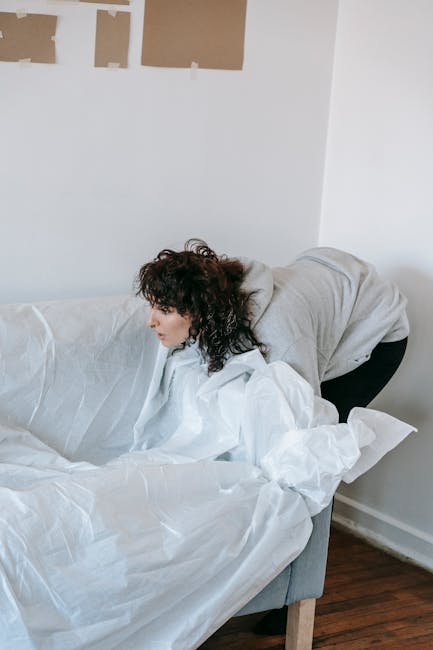
- Protect surfaces. Use blankets or cardboard where appropriate on delicate floors and corners. Small precautions are worth it.
- Separate extra waste. Gather bags, loose rubbish, and recyclable bits together so they can be removed efficiently.
- Decide whether dismantling is needed. Some sofas simply will not clear a landing unless they are partially taken apart.
- Schedule the clearance at a sensible time. Avoid busy building hours if possible. It makes the job easier and more considerate.
- Confirm disposal plans. Make sure the unwanted items are going somewhere appropriate, not just being shoved into the nearest available space.
If the property has awkward exterior access, shared bins, or side passages, it can help to think about the whole clearance rather than just the sofa. That is where a broader waste removal Greenwich approach becomes useful again.
Expert Tips for Better Results
There are a few small things that make a surprisingly big difference. These are the sort of details you only really appreciate after a few awkward removals, the kind where everyone is holding their breath on the staircase.
Measure the tightest point, not just the room. People often measure the sofa and forget the stair corner, which is where trouble starts. The smallest bend in the route is the real test.
Take photos before the job starts. A quick photo of the access route can help everyone think clearly about the removal plan. It sounds simple, because it is.
Empty cushions and loose covers first. Sofas are easier to move when they are lighter and less floppy. That sounds obvious, but it is frequently skipped.
Work with the building, not against it. In old properties, the easiest route is not always the most direct one. Sometimes a side angle or rear access point is far better.
Keep extra rubbish together. If you know you have other items going too, bundle them sensibly. One loose lamp, one cracked chair leg, and a stack of packaging can become a nuisance very quickly.
Ask whether recycling is possible. Not every item is reusable, but good clearance practice aims to divert suitable materials where it makes sense. If sustainability matters to you, have a look at the company's approach to recycling and sustainability so you know how mixed waste is handled.
A small human note here: people often apologise for "the awkward layout" as if they invented it. They didn't. London properties can be a bit of a puzzle, and that is fine. The right clearance approach is built for puzzles.
Common Mistakes to Avoid
Most problems with narrow-access sofa removal are preventable. The tricky part is that they usually come from rushing. Here are the mistakes worth avoiding.
- Not measuring the route properly. The sofa might fit the room but fail at the turn.
- Leaving clutter in the way. Shoes, plant pots, and stacked bags can turn a simple move into a wobble-fest.
- Trying to force the item through. If it does not want to move, stop and reassess.
- Ignoring fragile surfaces. Painted corners and narrow bannisters need care.
- Assuming all rubbish can be mixed without thought. Mixed waste is common, but it should still be handled sensibly.
- Booking too late. If a new sofa is arriving or a tenancy deadline is looming, delay creates pressure.
There is one more mistake that is easy to make: thinking narrow access means the job is "too small" to plan properly. It is not. In fact, these are often the jobs where planning matters most because the margin for error is tiny. Tiny.
Tools, Resources and Recommendations
You do not need a van full of specialist equipment to understand the process, but a few practical tools and resources can help you make better decisions.
| Tool or resource | Why it helps | Best use case |
|---|---|---|
| Measuring tape | Checks sofa dimensions and tight access points | Before booking or moving |
| Phone camera | Captures route layout and any awkward corners | For quoting or planning |
| Protective covers/blankets | Reduces scrapes to furniture and surfaces | During movement through tight spaces |
| Gloves with grip | Improves handling and safety | When lifting smaller items |
| Clear bags or boxes | Keeps loose waste together | For mixed rubbish and small debris |
From a planning point of view, the most useful "resource" is often a realistic understanding of your property. Maze Hill homes can vary a lot in layout, so one person's easy removal route may be another person's awkward squeeze. If you are unsure, it can help to review service information on services overview and compare it with the practical task at hand.
If the job is tied to a broader clearance or a move, local property articles can also be helpful context. Some readers like to pair practical clearance planning with reads such as Greenwich real estate purchase tips or a local look at Greenwich living, especially when they are balancing storage, layout, and next steps in the home.
Law, Compliance, Standards, or Best Practice
For rubbish clearance in the UK, the key principle is straightforward: waste should be handled and disposed of responsibly. You do not want items abandoned, fly-tipped, or left in a communal area where they cause problems for others. That is both a practical issue and a compliance one.
In everyday terms, best practice usually means three things:
- Safe handling so people and property are protected during removal
- Responsible disposal so waste goes through appropriate channels
- Clear communication so access issues are understood in advance
There is also a safety angle. Heavy lifting, awkward staircases, and tight corners can create injury risk if rushed. That is why experienced removal teams tend to plan the route first, use the right lifting technique, and avoid dragging items along surfaces unless there is no better option and it is properly protected. If you want reassurance on this side of things, it is worth reading about insurance and safety before booking.
For people who care about ethical disposal and greener practice, it helps to ask how reusable materials are separated and how mixed waste is processed. You do not need a lecture about it. Just a clear, honest explanation. That is usually enough.
Options, Methods, or Comparison Table
Not every narrow-access sofa removal needs the same approach. The right option depends on the item, the property, and how much else needs clearing. Here is a practical comparison.
| Method | Best for | Pros | Limitations |
|---|---|---|---|
| DIY removal | Light items, easy access, small volume | Cheap if you already have help | Higher risk of injury or damage; difficult in tight routes |
| Item-only collection | Just one sofa or a couple of bulky pieces | Simple and focused | May be less efficient if you also have bags or mixed rubbish |
| Mixed rubbish clearance | Sofa plus household waste | Convenient and tidy | Needs clear sorting and route planning |
| Full property clearance | Moves, refurbishments, or end-of-tenancy clear-outs | Most comprehensive | Can be more than you need for a single item |
For many local households, the best middle ground is a targeted clearance: not too small, not overcomplicated. If the sofa is the main problem but there is also broken furniture, packaging, or other clutter, a focused clearance often beats trying to handle each item separately.
That is especially true in compact flats. There is only so much room to stack things while you think about them, and eventually the corridor starts looking like a very unfortunate storage unit. Not ideal.
Case Study or Real-World Example
Here is a realistic example. A resident in Maze Hill needs to remove a three-seater sofa from a first-floor flat. The front hallway is narrow, the stairwell has a tight landing, and the sofa cannot be angled out in one go. On top of that, there are several bags of household rubbish, a small broken chair, and flattened packaging from a recent furniture delivery.
Instead of trying to wrestle everything out in one chaotic move, the clearance is planned in stages. Smaller rubbish bags are cleared first to open up the route. The sofa is checked for removable parts. Protective wrapping is used around the contact points. The team then takes the sofa through the stairwell at a controlled pace, turning it only where the space allows. Once the sofa is out, the remaining waste is collected and loaded in a tidy sequence.
The result is not dramatic, and that is the point. No wall damage, no shouting on the stairs, no last-minute panic. Just a clean finish and a room ready for what comes next. Sometimes the best clearance job is the one that feels almost boring in the end. That is a compliment, by the way.
Practical Checklist
Use this checklist before arranging Maze Hill sofa removal and rubbish clearance for narrow access:
- Measure the sofa and the tightest access points
- Check whether arms, legs, or cushions can be removed
- Clear the hallway, stairwell, and nearby landing
- Protect floors and corners if needed
- Gather all extra rubbish in one place
- Note any shared entrances, locks, or building restrictions
- Confirm the best time for access and removal
- Ask about recycling or responsible disposal for suitable items
- Decide whether you need item-only removal or a broader clearance
- Keep the route open until the job is fully complete
If you can tick most of those boxes, the job becomes much easier. Not perfect, maybe, but much easier. And that counts.
Get a free quote today and see how much you can save.
Conclusion
Maze Hill sofa removal and rubbish clearance for narrow access is really about making a difficult moving job feel manageable. The tight hallways, awkward turns, and shared spaces are not a problem if they are planned for properly. With the right preparation, the right lifting method, and a clear understanding of what needs removing, you can get bulky items out safely and avoid the mess that usually comes with guesswork.
If there is one practical takeaway, it is this: measure first, clear the route, and do not underestimate the access. That simple mindset saves time, protects the property, and makes the whole process feel far less stressful. And once the sofa is gone and the space opens up again, the room usually feels calmer straight away. A bit lighter. A bit easier to live in.
That small feeling of relief? It matters more than people think.

Copyright © . House Clearance Greenwich. All Rights Reserved.